The challenge
A collective of 8 associated freelancers was losing time — and money — in scattered tools. Projects in one place, invoices in another, proposals on a hard drive, client history in email threads. Nothing was centralized, nothing was documented, and every new associate had to rebuild their own workflow from scratch.
They needed more than a project management tool. They needed a complete operating system for their freelance business — one that could be duplicated, customized, and shared with every new associate without breaking their own working habits.
Our approach
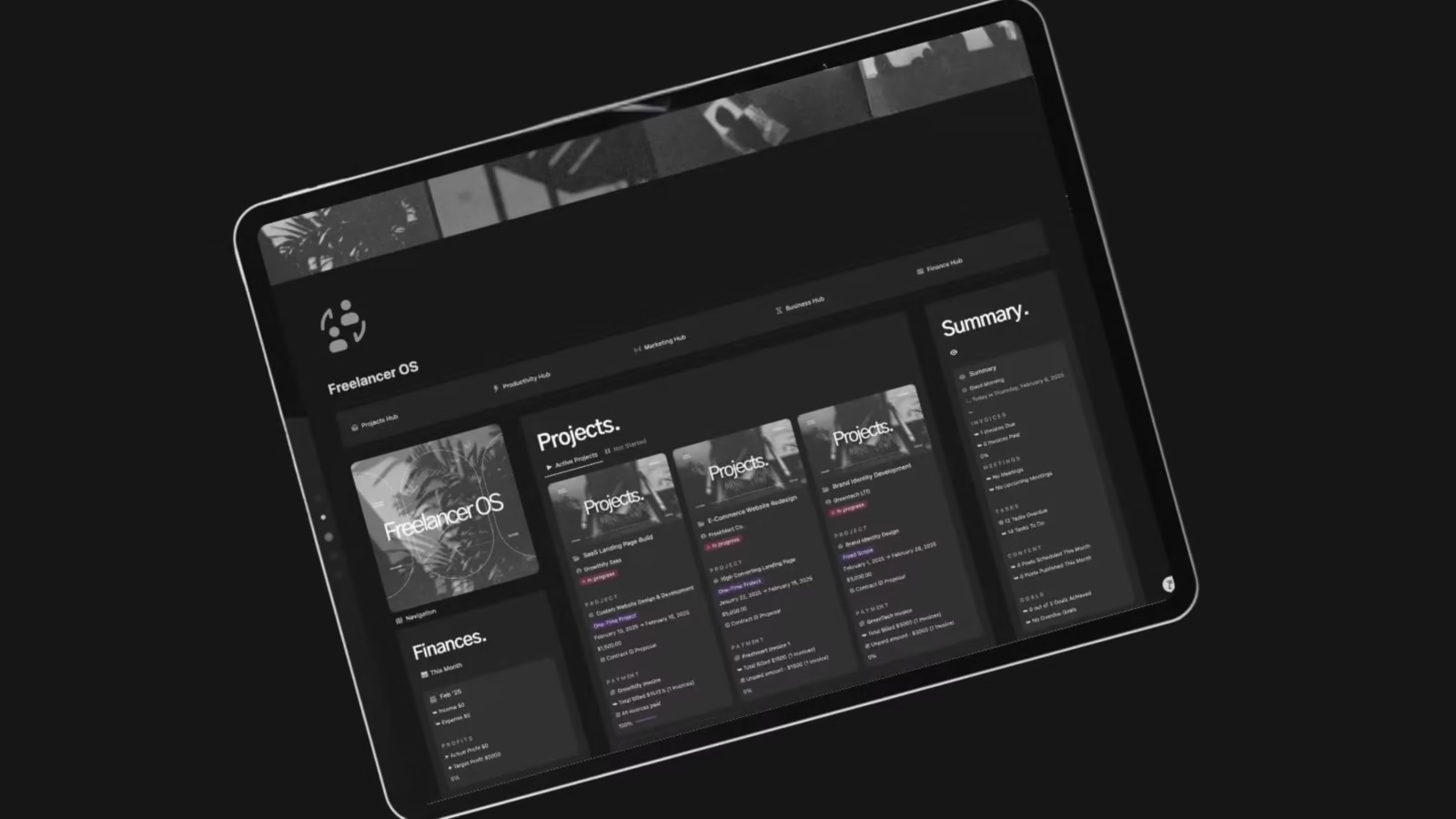
We designed Freelancer Notion OS as a full business infrastructure inside Notion. Instead of stacking 10 different SaaS tools, we built one central system that covers every stage of a freelancer’s work — from lead capture to final invoice.
The system is organized into five hubs, each solving a specific need of the freelance workflow:
- Project Hub — Leads, projects, CRM, clients, invoices, proposals, contracts, time tracking, appointments, and client workflow in a single, connected database architecture.
- Productivity Hub — Task manager, daily/weekly/monthly planners, habit tracking, and a learning space to archive knowledge.
- Marketing Hub — Content pipeline, marketing campaigns, portfolio manager, ads manager, testimonials and referrals.
- Business Hub — Goals, events, offers, roadmap, style guide, client process, personal brand, resource library.
- Finance Hub — Income tracking, expense tracking, income categories, expense categories, monthly and annual views.
Each hub uses Notion’s relational databases, linked views, and filtered templates — so information flows automatically between modules. A new project automatically appears in the client history, the invoice pipeline, the time tracker, and the financial overview.
The design language is minimal, monochrome, and highly structured — no decorative clutter, just clean typography and clear hierarchy. It looks more like an app than a Notion page, which was intentional: the goal was to feel like a real OS, not a spreadsheet collection.
What we delivered
- Complete Notion OS architecture (5 hubs, 25+ modules)
- Relational databases with linked views across hubs
- Client CRM with full history and communication tracking
- Invoices, proposals, and contracts modules
- Time tracking and automated billing workflow
- Content pipeline and marketing campaigns planner
- Portfolio manager for high-end client acquisition
- Financial dashboard with monthly and annual views
- Daily, weekly, and monthly planners with habit tracking
- Documentation and onboarding flow for new associates
- Monochrome minimalist design system
- Duplicate-on-click delivery for new users
The result
The 8 associates now run their entire freelance business from one single Notion workspace — projects, clients, finances, content, and strategy all connected. New associates onboard in a day instead of weeks, because the entire operating system is duplicated with a click.
Freelancer Notion OS is no longer just an internal tool — it’s now a productized system that any freelancer or solo consultant can adopt to structure and scale their activity.